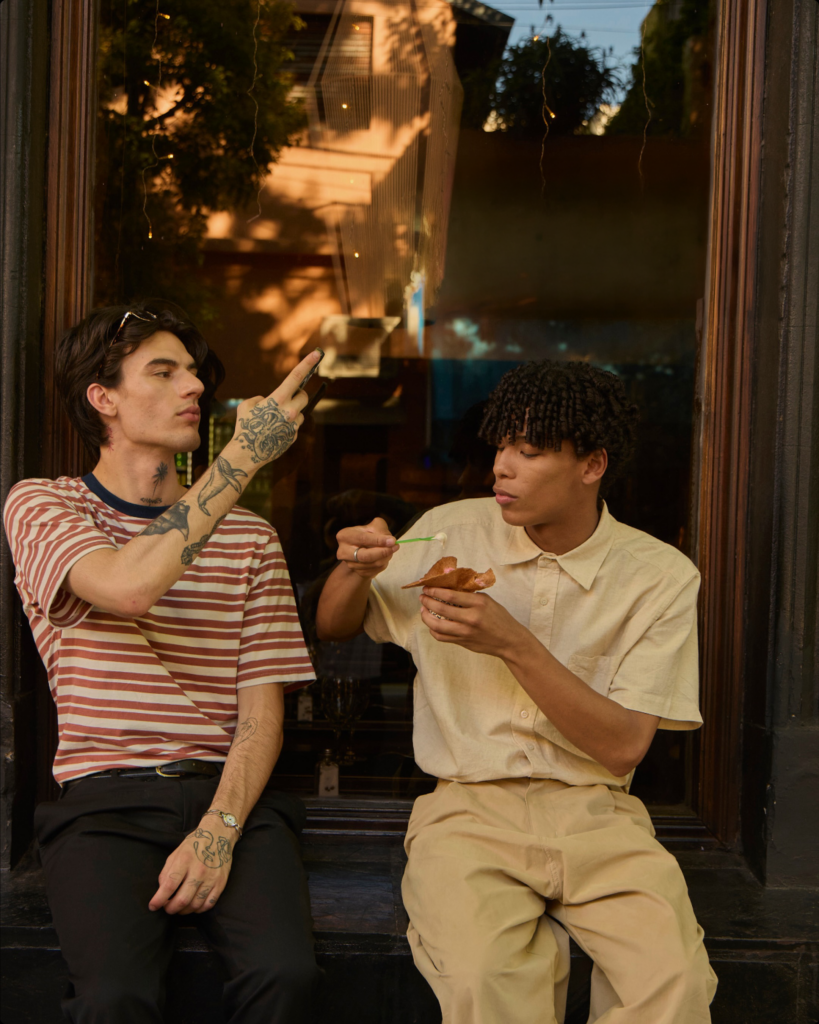
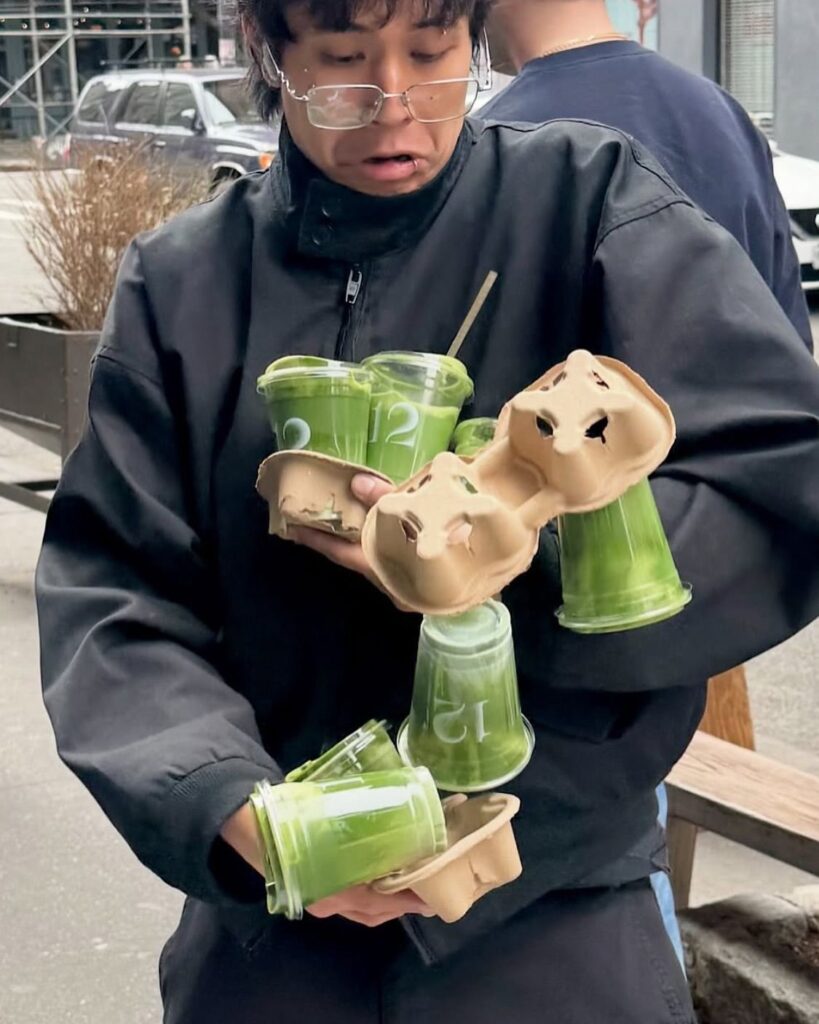
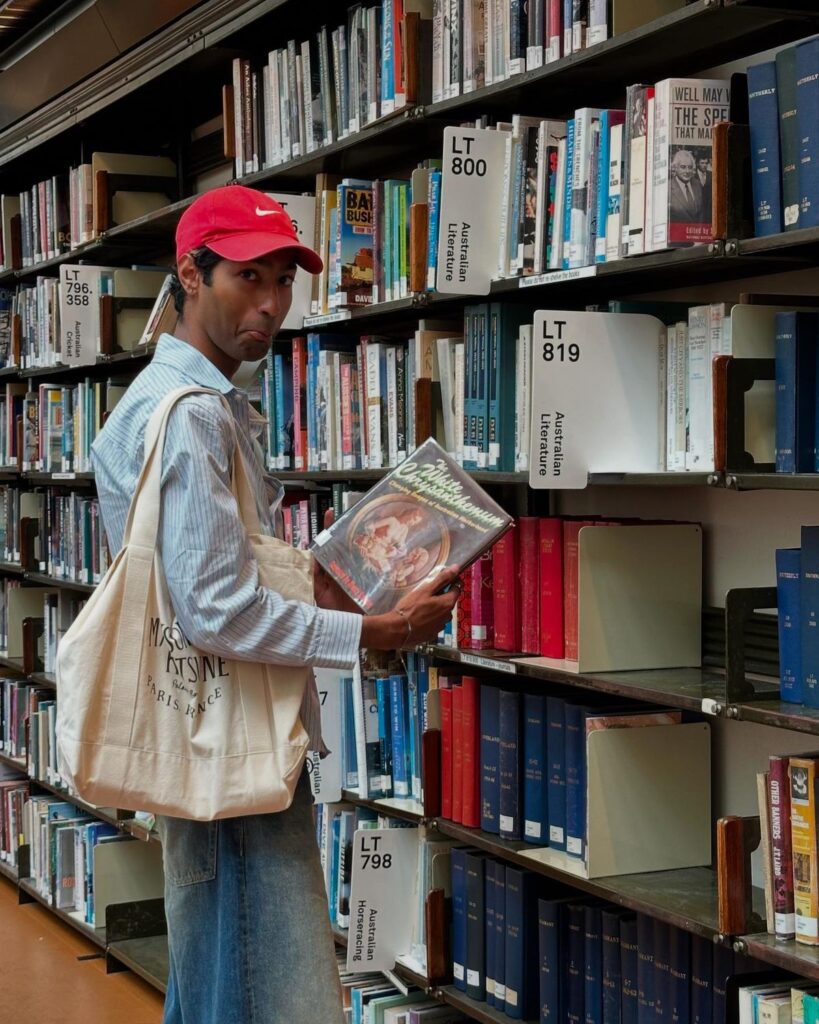
Picture this: a young man is wearing big headphones, bigger jeans, a sort-of-cropped t-shirt, and glasses we’re going to assume he doesn’t need. He’s carrying a tote bag (essential), a matcha latte (swap out for a black coffee in winter), and a book by bell hooks, Sally Rooney, or Joan Didion. Crucially, the book must never be hidden away inside the tote bag but carried like an accessory or held up conspicuously in front of him. Congratulations, you have just conjured up the Performative Male!
The snarky male counterpart to the pick-me girl meme, his getup and attitude are meticulously crafted to – we assume – lure in a certain type of woman. He’s not actually a photographer, but he carries around a film camera so you’ll think he’s artistic. The novelty key chains dangling from his belt are selected to make him seem softer, in touch with his feminine side even. His look, from head to toe, doesn’t tell you who he is, it tells you who he wants you to think he is. Exhausting, right?
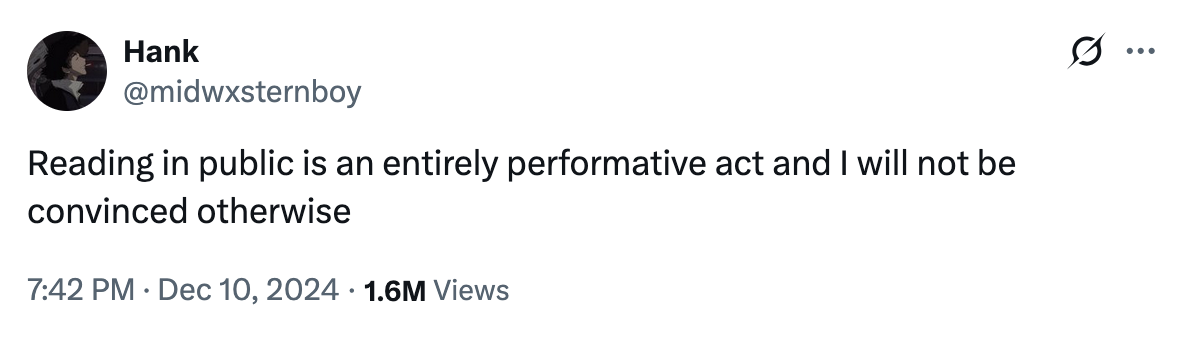
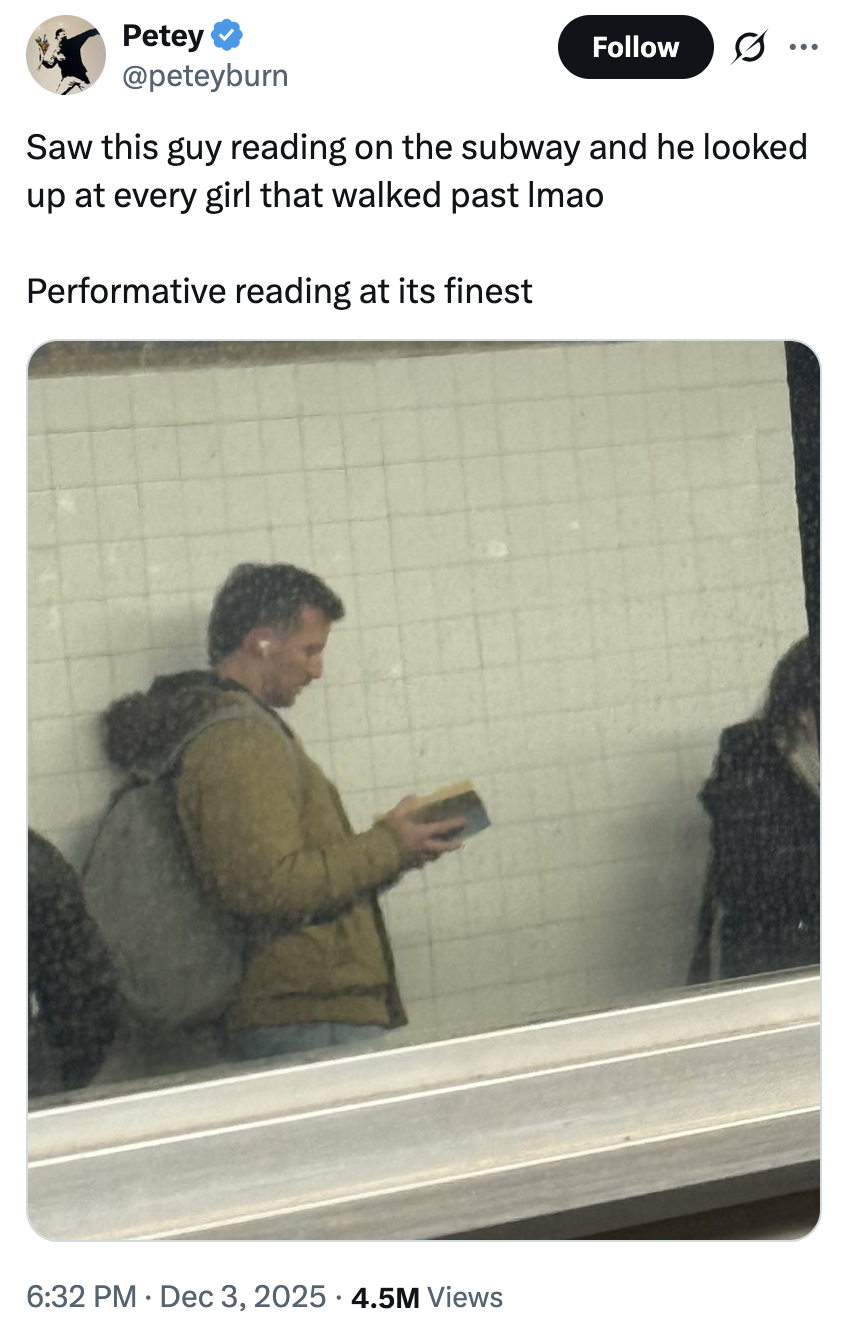
Don’t get me wrong, the first few times I came across this meme, I found it funny. Who doesn’t love recognising a caricature of a certain type of person and being given permission to laugh at them? Oh god, I know this type of guy! Remember that guy? He was so this type of guy! But it quickly breached containment, as it so often does online, and slipped into the murky waters of rage bait and everyone’s favourite pastime: policing strangers in public. Reading on the train is peacocking. In fact, reading at all is now performative and being on page 1 is even more embarrassing. If you’re especially unlucky, you’ll be filmed by a stranger and uploaded to TikTok with a caption like performative male final boss or relax bro, she’s not gonna let you hit – the insinuation being, of course, that anything a man does in public must be for the attention of women. From personal style to one of the most universal hobbies on the planet, it seems there’s no limit to how deep we believe inauthenticity can run. Is there a self left at all, under everything we’ve deemed a phoney performance?
IMG. 1
None of the criticism is entirely new: every few years, we recycle a version of this conversation around whatever trend becomes the dominant youth aesthetic. We dissect what message the cut of the trousers and part of the hair is supposed to send, we question the authenticity of the music. We wonder whether it all adds up to a legitimate subculture or is just another meaningless fad, packaged-up and marketed to the masses. But as surveillance culture thrives and filming people without their consent becomes increasingly normalised, such scrutiny is only getting more and more suffocating.
Gen Z, along with anyone else who identifies as ‘chronically online’, has adopted a hyper-awareness of how they’re being perceived at all times, because we now live in a world where anyone can become content for the consumption of others, whether you like it or not.
And when you are used to performing for an imagined camera you assume everyone else is too. If every public appearance is a crafted act, then every action is fair-game for interrogation from the audience.
IMG. 2
Caught on camera without a smile? Mean girl. Checking your phone while at dinner with your wife? Girl, leave him. Reading a book popular with the opposite gender? Pick-me. We’ve always been judged by the way we present ourselves in society, but the stakes feel higher with the level of surveillance we’re now under. It’s no longer nosey neighbours judging our outfits or hobbies and the things we choose to read, watch, or listen to, but potentially millions of people online. We’ve turned the cultural and media consumption of other people into content and offered it up on a platter for the consumption of others, an Ouroboros gorging on itself until there’s no substance left.
When we’ve ridiculed all the men into putting down the novels and scared the teenagers into never experimenting with their personal style and successfully shamed everyone else into never stepping outside of the carefully drawn boxes we’ve decided they belong in, will it feel like a victory? Will we stop filming strangers in public, or will we just invent new things to point and laugh at?
The criticisms of others being ‘performative’ or ‘pick-me’ only hold up if we collectively agree we’re living in the panopticon and behave accordingly. I’d wager we are all performing, but only to the extent that any awareness of being perceived by other people subconsciously influences our behaviours, whether the audience is a crowd of strangers, a potential love interest, the unseen but ever-present camera, or simply sparing a thought for your neighbours and pulling a dressing gown over your granny pants before you take the bins out. Maybe the man on the tube is reading All About Love because he enjoys it. Maybe he’s reading it because he’d like to be perceived as the type of guy who reads feminist literature. Does it matter?