Last night I spent an hour on Facetime with 6 of my closest friends, arguing about a book, and it was one of the highlights of my week. We’ve been doing this every month for almost 2 years, taking it in turns to pick a novel and lead a discussion. It’s helped me rediscover the love for reading I had as a kid, when I’d manage to inhale a novel a day before school turned it into a chore.
Our ability to keep the book club going through holidays, sicknesses, marriages, and grief has surprised even the most avid readers among us, but it’s become the most consistent way for us to keep in touch across five cities in two different countries. Instagram stories and the occasional ‘what’s new?’ WhatsApp can never compete with the feeling of spending quality time with someone. Starting a book club helped to take our friendship off social media and bring it back to face-to-face interactions.
IMG. 1
Finding ways to connect with people over simple, low-cost activities has become increasingly popular. From run clubs and cycling meetups to amateur chess tournaments in cafes and Paint and Sips in pubs, it seems adults are craving the same socialisation and connecting over shared passions that we’d once get from after school clubs as kids. Growing up, we tend to lose the uncritical way kids play, create, and bond, and adults are starting to realise the social toll it’s taking.
Molly, co-founder of Quti
“When 70% of Gen Z say they’re lonely, that tells us something important. It’s not that we don’t have friends, it’s that we don’t have enough intentional time together”
Quti is a new ‘quality time calendar’ app created to host social events like board game nights around London. “People are craving real-life connection, so we wanted to create free or low cost, inclusive spaces where you can just come and sit across from someone, Molly says.” No performance, no pressure, no heavy spending. In a cost-of-living crisis and a divisive social climate, community shouldn’t feel like a luxury, it should feel accessible.”
As social media becomes less social, with algorithms now designed to expose us to an infinite loop of content from strangers rather than connecting us to people we know IRL, there’s an increasing hunger for social experiences that don’t rely on fickle algorithms to function.
IMG. 2
Mel recently moved back to the UK after 10 years abroad and is looking for ways to deepen her roots here. She’s joined not one, but two choirs since the start of this year. “Nothing professional, just a fun, sing-in-the-shower, enjoy yourself kind of setup.” She’s ‘secretly’ wanted to join a choir for years, but her recent move inspired her to finally take the plunge. “I just want to rediscover what it’s like to live in this city again, be around people and develop my community,” she says, explaining that she’s not necessarily in it to make friends, but looking for community in the broader sense. “It’s all about a shared experience with likeminded people, to be a part of something where I’m in a third space, doing an activity with other people all doing the same thing.” In our increasingly siloed worlds, it’s more important than ever to find places we can hang out outside of the confines of work, home, or consumption (think shopping, dining out, entry fees, the many ways that being in public often demands we cough up money).
IMG. 3
Billie is a film buff who recently started a film club. She’s used to watching movies as a solo activity, but she’s been looking for ways to broaden her social circle and decided her favourite hobby would make the perfect starting point. She invited a few acquaintances and friends-of-friends to meet up once a week, watch a movie, and have a discussion. “My other friends don’t care about movies as much as I do, so it’s both a way to get to know these people better and turn my passion for cinema into something social,” she says. Building community doesn’t have to involve some big, scary change to your routine or personality. By getting nerdier with the things you already love and more uninhibited in your pursuit of fun for fun’s sake, you’ll find ways to connect with people who want to share in those experiences with you.
IMG. 4
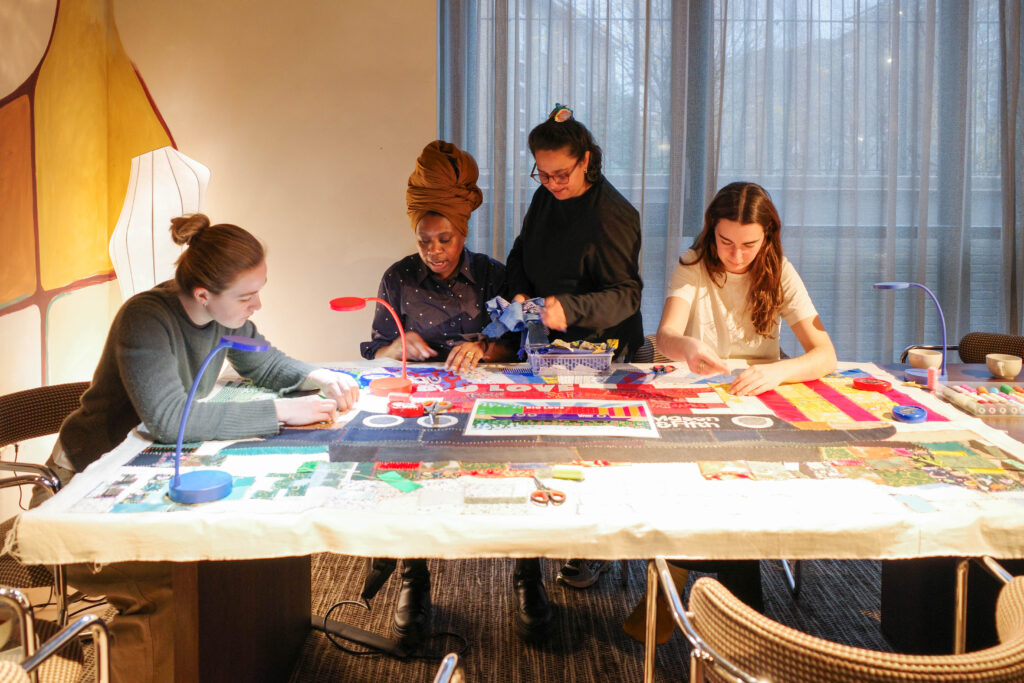
Mel has been looking for an art class to join alongside her weekly singing clubs. “I think there’s something about rediscovering a craft you loved as a kid that helps you relearn how to enjoy stuff again,” she says. As she gets older, she’s lost some of the embarrassment she used to have around trying new things. “Rather than thinking ‘I’ll only do that if I’m immediately good at it,’ it’s like, ‘I’ll do it because I’m enjoying it!’ Nothing else matters.”
When we get older, we often lose the love of doing things ‘just because’. Social media exacerbates this, making us feel like every pastime can be converted into content and every activity you participate in is up for the scrutiny of strangers. We strip our hobbies down into ‘skills’ we either succeed or fail at, or even try to monetise them. In an epidemic of loneliness, finding ways to connect by rediscovering the kind of play we’d engage in as kids, promoting kindness, and sharing our passions with others is more important than ever. Despite the rampant negativity we’re surrounded with online, when we come together in person, communities can still form and blossom the same way they always have – through shared spaces and shared passions.