Seriously Unschool: Alternative Education Goes (Almost) Mainstream
Words by Mischa Gilbert
When I was growing up in the ‘80s and ‘90s, homeschooling was definitely not cool. On the contrary, it was seen as the preserve of, frankly, hippies and weirdos. That school absence can be a criminal matter has, over the years, given it an extra air of deviance. This was, of course, way before the internet, when anyone could find (or create) their own tribe, however niche. So a motley crew of non-mainstreamers found themselves at the margins. Full disclosure: for a time, I was one of them.
I suspect a big part of this negative attitude came from the fact that, at that time, life was pretty good. With the benefit of hindsight, the period after the Berlin Wall, but before 9/11, the Financial Crisis, and Brexit was, in many ways, halcyon. You only need an alternative when the default option is lacking. Still, there were always kids who got bullied, had problems, didn’t fit in, which caused parents to consider alternatives.
IMG. 1
In the mid-2020s, however, Alternative Education is booming; even a little bit aspirational. A steadily growing movement in the 2000s, the pandemic supercharged this trend. The number of children being educated out of school almost doubled between 2020 and 2024. It’s complicated, but in a nutshell, some kids fell out of the habit and developed aversions and other anxieties, finding it hard to go back; online learning developed apace, making it easier to learn away from the classroom; and parents’ desire to have more autonomy and wrest control away from outside influences (the State, Big Tech, etc) came to the fore.
Despite this, the alternative education movement can be traced back to at least the 1920s—an ‘alternative’ to several decades of what had by then become mainstream education. Perhaps most notably, Steiner and Montessori emerged at this time, offering a more holistic and child-centred approach.
IMG. 2
Sometime in the 2000s, there was a vibe shift, undoubtedly powered by the internet, a liberalising effect that permeated the culture. More understanding that one size does not fit all, and growing awareness around ‘diversity’ of personality, learning styles, and cognitive ability – from ‘Special Educational Needs’, to ‘Gifted and Talented’ (ditto the diagnoses of increasing numbers of adults). This increasingly ‘divergent’ population has found itself at odds with the mainstream, including the mainstream school setting. Teachers are more stretched than ever with class sizes and paperwork. As the pace of change has accelerated, the school system has struggled to keep up. This lag could be about to get highly consequential: AI literacy is to be rolled out in schools by 2028, almost three years from now – basically eons from now.
There is also the rather stark reality that three-quarters of the time a parent spends with their child occurs by the age of twelve. As the modern parent-child relationship has been recast as something more akin to friendship, so the desire to maximise this precious time has grown.
Curiously, whilst a lack of attendance can land parents in legal hot water, once you decide to remove your child from school (or if you never register them in the first place), UK law is relatively relaxed about how exactly you educate your child. Enter the growing sub-genre of homeschooling – ‘Unschooling’: eschewing the formal curriculum in favour of a broader definition of what constitutes ‘education’. One significant driver of this trend – though by no means the only one – is successive governments’ focus on testing, targets, and standardisation. It’s noteworthy that Silicon Valley kids have been attending Steiner schools for decades, keen as their parents are to keep them away from the increasing technologisation of the classroom, and to develop the whole child rather than just their ability to pass tests.
IMG. 3
IIona, who lives in London with her husband and seven-year-old daughter Anna, who has never attended formal education. “In Latvia, where I grew up, kids start school at seven, so for me any younger feels too early; also, we have three months of summer holidays, rather than the six weeks children get here. Being free to travel is a big motivator for us – we currently leave the UK in the winter months, spending months in the US and Mexico. Perhaps the biggest reason, though, is not being anti-school as such, but being anti the state having so much control over our lives and the way we bring up our child”.
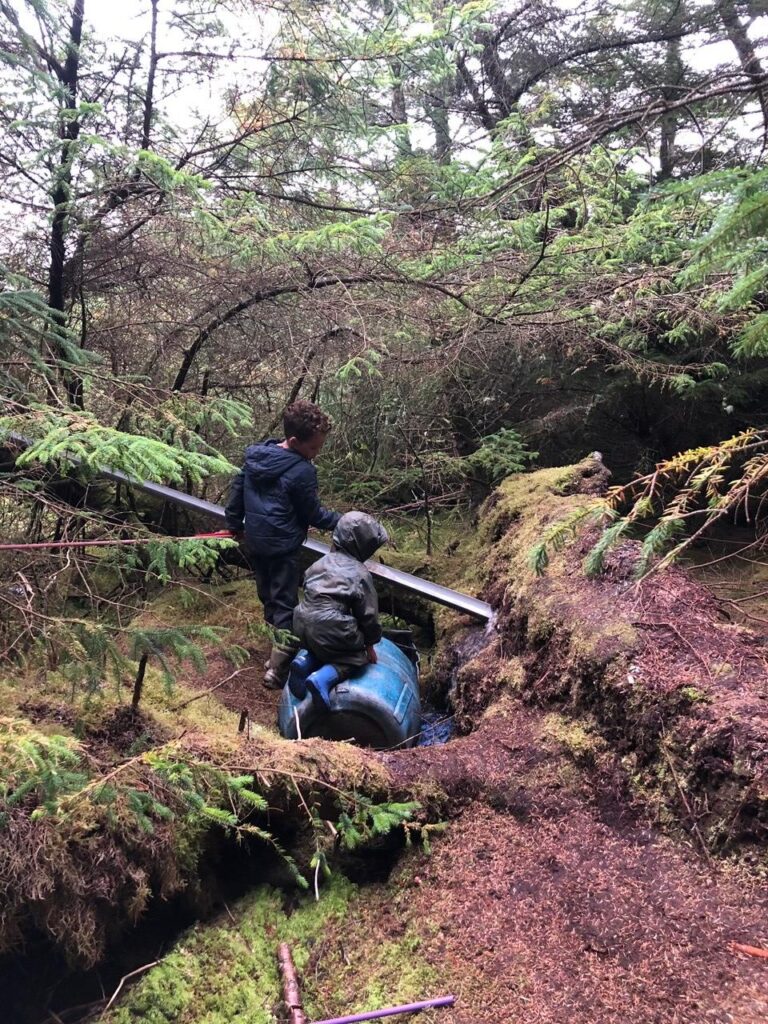
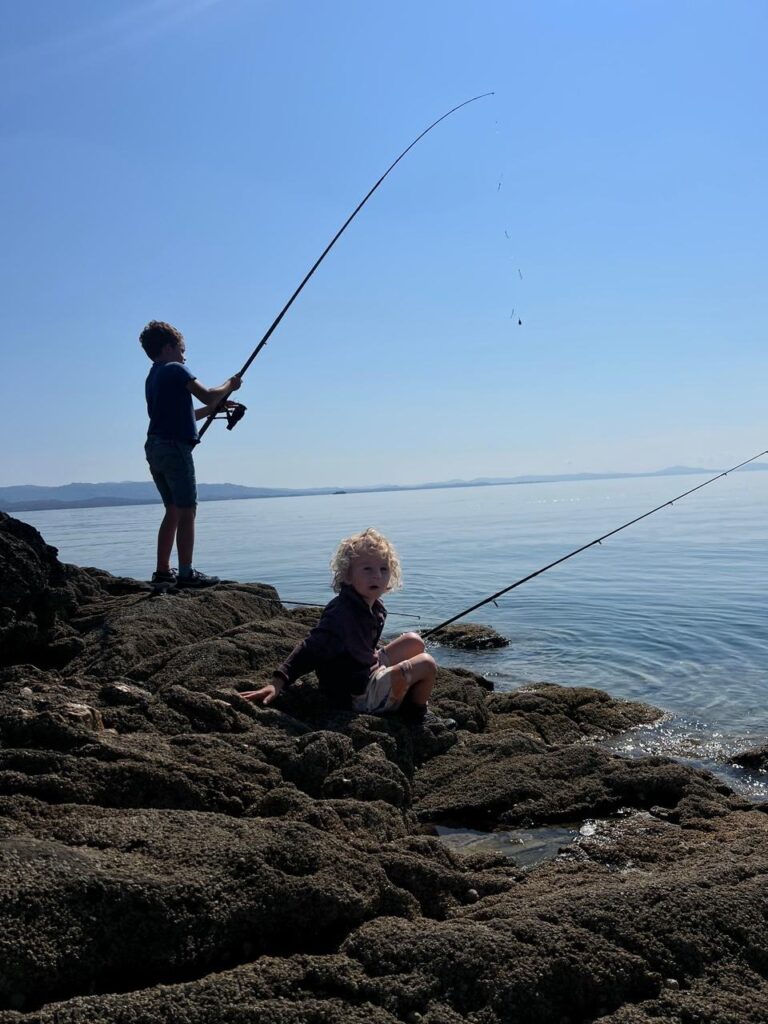
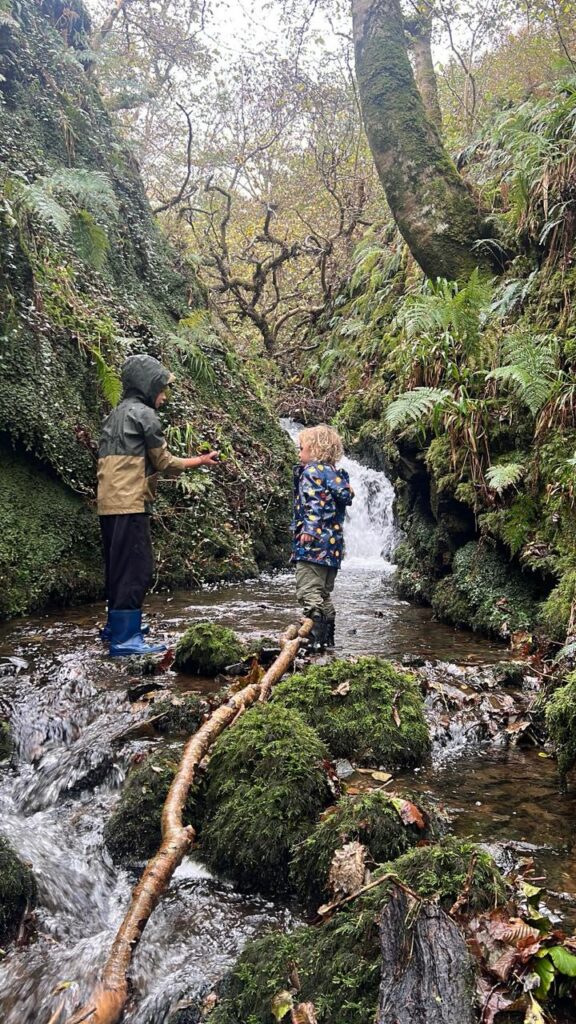
Sarah, who has two primary-aged children and lives in the Inner Hebrides, wants her boys to go at their own pace, in their own way. She started educating at home in London and continued after the move to the Isle of Skye. Whilst there is less of an alternative education community where they now live, nature is abundant, plus opportunities to connect online and commune in person at events like ‘Camp Kindred’ – an unschooling festival.
IMG. 4
There is also the matter of family and working life becoming more fluid. Mainstream education was a kind of pre-factory ‘factory’ – sit still, face the front and learn what’s prescribed. In other words, it was preparing the next generation to fit into the workforce. But working life is so different today. Yes, schools now have concessions to modernity, like ‘carpet time’, just as we have pool tables and mini bars in offices, but so many of us have hybrid lives; in many ways, our lives now resemble the cottage industries of old, with many free agents beavering away remotely. Work and home life are often misaligned with the dictates of the Local Education Authority, to the exasperation of many parents. The fundamental fact that school and work hours don’t generally overlap is the most glaring omission. There’s the fact that family getaways can only be taken at the most expensive and busiest times. I’ve never heard of a school flexing around contract or project work. Nor the fact that so many families now have two working parents; what once was a choice is now verging on a necessity. In other words, whilst the wider world has evolved, the school system has not developed in a complementary way, and this gap creates discord in kids’ and parents’ lives alike.
There’s a lot to be worried about today, a lot of upheaval, but there’s also something really liberating going on: a reevaluation of the life course in general. We’re so wired to think in terms of education, work, and retirement – in that order. But realistically, we now have lifelong learning as a result of the sheer pace of change. Retirement, whilst obviously still a thing, is much less sharply defined (not a description fit for purpose when the average lifespan has about doubled in a century). And so too is it the case that children need not go into the relatively formal setting of school, being necessarily separated from their parents and socialised – some might say ‘culturally kidnapped’ by the State (!) alongside the pernicious effect of so-called ‘social’ media and the innocuous sounding ‘screen time’. Arguably, this has become a matter of great urgency, as we are poised at the edge of the Fourth ‘Industrial’ [AI] Revolution, where the skills taught today may, in short order, become irrelevant. Why not let’s reimagine and go beyond this linear, ‘education’ – ‘real life’ dichotomy to make something more future-proof for kids and grown-ups alike?